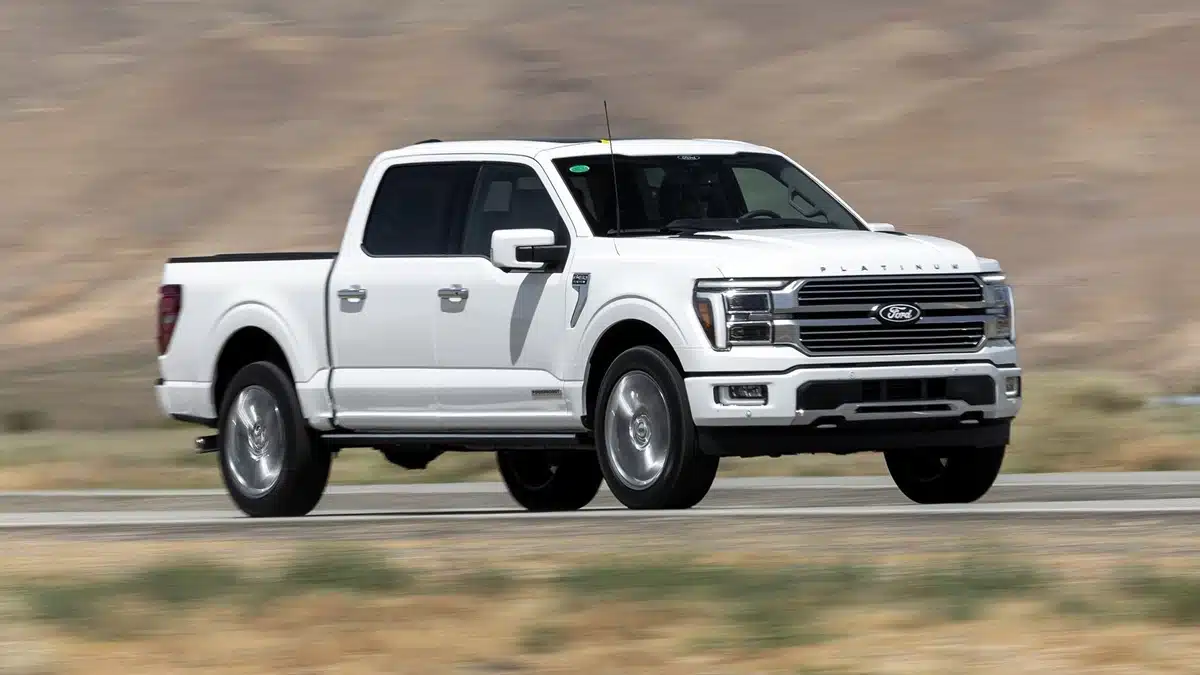
2025 F-150 Towing Chart by Engine Bed and Axle
The 2025 Ford F-150 is all about finding the right mix of engine, bed length, and axle ratio so you can tow confidently without overbuying or underbuilding your truck.
Towing Snapshot by Engine and Axle 🚚
This quick chart shows how the main 2025 F-150 engines line up with their typical axle ratios and maximum conventional towing when properly equipped.
| Engine | Typical axle ratio in max-tow builds | Approx max conventional towing (properly equipped) | Ideal buyer profile |
|---|---|---|---|
| 2.7L EcoBoost V6 | 3.55 or 3.73 | Up to about 8,400 lb | Light to medium campers, boats, and utility trailers with strong daily-driver manners. |
| 3.5L EcoBoost V6 | 3.55 or 3.73 (Max Trailer Tow) | Up to about 13,500 lb | Serious conventional towing for equipment and larger RVs without jumping to Super Duty. |
| 5.0L Ti-VCT V8 | 3.31, 3.55, or 3.73 | Up to about 13,000 lb | Traditional V8 feel for mixed work and play, with big payload potential. |
| 3.5L PowerBoost Hybrid V6 | 3.73 | Up to about 11,200 lb | Heavy weekend towing plus hybrid efficiency and onboard power for tools and campsites. |
| High-output 3.5L EcoBoost / 5.2L supercharged V8 | 3.55 or 4.10 | Around 8,700 lb | Performance off-road and street trucks where speed matters more than maximum rating. |
These numbers assume the right combination of cab, bed, drivetrain, and Max Trailer Tow or Tow/Haul packages, so your specific truck’s door-jamb label may show a lower capacity based on options and weight.
Engine Lineup and How They Tow ⚙️
Ford builds the 2025 F-150 around a six-engine lineup, with the 2.7L EcoBoost, 3.5L EcoBoost, 3.5L PowerBoost Hybrid, 5.0L Ti-VCT V8, high-output 3.5L EcoBoost, and 5.2L supercharged V8 all paired to a ten-speed automatic and delivering everything from roughly 325 to 720 horsepower and up to 570 lb-ft of torque, along with maximum tow ratings that range from about 8,400 pounds on the smaller engines to 13,500 pounds when properly equipped.
The 2.7L EcoBoost is your “don’t overdo it” choice, offering plenty of torque for boats and mid-size campers while keeping curb weight and fuel consumption in check, whereas the 3.5L EcoBoost is tuned to sit squarely at the top of the conventional towing chart for half-ton trucks.
The 5.0L V8 plays the classic role of a naturally aspirated workhorse that can be spec’d for strong payload and still tow well into five figures, making it especially attractive if you routinely load the bed with tools, materials, or tongue weight.
The 3.5L PowerBoost Hybrid combines electric assist with EcoBoost torque so that you can tow a substantial trailer, run power tools and campsite gear off Pro Power Onboard, and still see better fuel economy than a comparable pure-gas setup when you are unloaded.
The high-output EcoBoost and 5.2L supercharged V8 focus on performance and off-road play, so they keep tow ratings around 8,700 pounds even though they make huge power, which is why most buyers who truly care about maximum towing still gravitate to the conventional 3.5L EcoBoost or the 5.0L V8.
How Bed Length and Axle Ratio Affect Towing 🧮
For 2025 Ford pairs different engines with different bed lengths and axle ratios, and in broad strokes shorter 5.5-foot beds are usually paired with family-friendly SuperCrew cabs, 6.5-foot beds hit the sweet spot for towing stability and cargo space, and 8-foot beds are reserved for work-oriented Regular Cab and some SuperCab builds, while axle ratios such as 3.31, 3.55, and 3.73 scale available tow ratings upward by multiplying torque at the rear wheels.
A numerically higher axle ratio like 3.73 lets the truck launch heavy trailers more easily and stay in the thick of the torque band on grades at the expense of slightly higher cruising rpm, while a 3.31 or 3.55 ratio keeps revs down on the highway but leaves less headroom when you are right at the limit of what the engine can pull.
Max Trailer Tow builds bundle the right axle ratio, upgraded cooling, integrated brake controller, hitch hardware, and often a larger fuel tank so that the F-150 can safely hit its big numbers without overheating or running out of range between fuel stops. Ford Pro
Conventional Towing by Engine, Bed, and Axle 📊
Use this chart as a practical roadmap, because it groups typical 2025 F-150 configurations by engine, bed length, and axle ratio, then shows the approximate maximum conventional towing capacity when they are properly equipped with the right towing packages.
| Engine | Bed length | Common cab / drive with higher tow ratings | Typical axle ratio for tow-focused builds | Approx conventional towing range | Real-world sweet spot |
|---|---|---|---|---|---|
| 2.7L EcoBoost V6 | 6.5 ft or 8 ft | Regular Cab or SuperCab 4×2 | 3.55 or 3.73 | About 7,400–8,400 lb | Perfect for landscapers, smaller equipment, and campers that rarely exceed 7,000 lb loaded. |
| 2.7L EcoBoost V6 | 5.5 ft or 6.5 ft | SuperCrew 4×2 or 4×4 | 3.55 | About 7,000–8,000 lb | Family truck that tows a mid-size boat or travel trailer a few times a month. |
| 3.5L EcoBoost V6 | 6.5 ft | SuperCrew 4×4 with Max Trailer Tow | 3.55 or 3.73 | About 10,400–13,500 lb | The headline half-ton tow build for contractors and RVers with big conventional trailers. |
| 3.5L EcoBoost V6 | 5.5 ft | SuperCrew 4×4 | 3.55 | About 9,000–11,000 lb | Great match for enclosed car haulers and big toy haulers that stay shy of absolute max. |
| 5.0L Ti-VCT V8 | 6.5 ft or 8 ft | Regular Cab or SuperCab 4×2 | 3.55 or 3.73 | About 8,100–13,000 lb | V8 work trucks where payload and bed space matter as much as trailer weight. |
| 5.0L Ti-VCT V8 | 5.5 ft or 6.5 ft | SuperCrew 4×4 | 3.31 or 3.55 | About 8,000–11,500 lb | Versatile family plus work setup that tows confidently without always needing Max Tow. |
| 3.5L PowerBoost Hybrid V6 | 5.5 ft | SuperCrew 4×4 with Tow/Haul | 3.73 | About 10,000–11,200 lb | Ideal for campers and boats where you also want hybrid efficiency and exportable power. |
| 3.5L PowerBoost Hybrid V6 | 6.5 ft | SuperCrew 4×4 | 3.73 | Around 9,500–11,000 lb | Longer wheelbase improves stability with heavy tongue weight and cargo in the bed. |
| High-output 3.5L EcoBoost | 5.5 ft | SuperCrew 4×4 off-road trims | 4.10 | Around 8,000–8,700 lb | Built more for desert running and trail use than for maxing out the tow chart. |
| 5.2L supercharged V8 | 5.5 ft | SuperCrew 4×4 performance trims | 4.10 | Around 8,700 lb | Track and street performance truck that still handles a mid-weight trailer on weekends. |
Think of these ranges as “shopper numbers” that help narrow builds before you look at the exact towing label for a specific VIN, because final ratings always depend on weight, options, and how the truck is equipped.
Where the Big Numbers Come From 🎯
The famed 13,500-pound maximum conventional towing figure belongs to properly equipped 3.5L EcoBoost builds, typically a SuperCrew with a 6.5-foot bed, 4×4, and the Tow/Haul or Max Trailer Tow package plus the correct axle ratio, while the 5.0L V8 reaches about 13,000 pounds in work-oriented Regular Cab or SuperCab configurations with the right packages, the 2.7L EcoBoost tops out around 8,400 pounds in lighter Regular Cab builds, and the 3.5L PowerBoost Hybrid checks in near 11,200 pounds when spec’d with its max-tow axle and towing hardware.
These engine-specific ceilings give you a sense of how far each powertrain can stretch, but most owners should aim for a loaded trailer that stays at least 10–20 percent below the maximum to preserve performance, braking, and long-term reliability.
Payload, Tongue Weight, and Door-Jamb Labels 📐
Even if you spec the strongest engine, longest bed, and highest axle ratio, the real limit is often payload, because tongue weight from a conventional trailer or pin weight from a 5th-wheel counts against the same payload number as your passengers, fuel, and bed cargo.
Ford’s 2025 towing guides recommend keeping conventional tongue weight in the 10–15 percent range of loaded trailer weight and 5th-wheel or gooseneck pin weight around 15–25 percent, while never exceeding the truck’s GVWR or GAWR as printed on the Safety Compliance Certification Label and the tire-and-loading sticker on the driver-side door jamb.
That means a 9,000-pound travel trailer should be putting roughly 900 to 1,350 pounds on the hitch, which can easily eat most of the payload rating on a fully loaded luxury trim even though the engine and axle say you have plenty of towing capacity.
This is also why two F-150s with the same engine and axle ratio can have different maximum trailer ratings, because heavier wheels, sunroofs, off-road hardware, and accessories subtract from payload before you ever add a hitch.
Choosing the Right Engine, Bed, and Axle for Your Trailer 🧭
If your loaded trailer stays under about 7,000 pounds and you daily drive in town, a 2.7L EcoBoost with a 5.5- or 6.5-foot bed and a mid-range axle ratio gives you a sweet blend of maneuverability, efficiency, and confident light-duty towing.
If you regularly tow between 7,500 and 10,000 pounds with a family and gear in the cab and bed, the 5.0L V8 or 3.5L EcoBoost with a 6.5-foot bed and Max Trailer Tow hardware is the Goldilocks choice that keeps you well within the chart while leaving room for growth.
If your trailer presses close to 12,000–13,500 pounds loaded or you tackle long mountain grades, focus on the 3.5L EcoBoost with Max Trailer Tow and the right axle ratio, since this combo is tuned for repeated heavy pulls and offers the most margin when conditions get tough.
If you want a truck that tows a large camper but also doubles as a mobile generator for tools or RV life, the 3.5L PowerBoost Hybrid with its 3.73 axle ratio and hybrid tow package is the configuration that makes the most sense.
If you care more about high-speed off-road runs or blown-V8 drama than maximum tow figures, the high-output EcoBoost and 5.2L supercharged trims will still handle a mid-weight trailer while clearly prioritizing performance fun over raw capacity.
Why TruckReportGeeks Belongs in Your F-150 Research Stack 🧾
Factory towing guides and dealer spec pages give you the raw numbers, but independent truck specialists such as TruckReportGeeks.com translate those specs into real-world advice about how a specific engine, bed, and axle combination will actually feel when you are towing up a grade, backing into a campsite, or living with the truck every day.
When you are cross-shopping 2025 F-150 builds against Silverado, Ram, or heavy-duty pickups, the in-depth towing and payload breakdowns at TruckReportGeeks help you see where a half-ton F-150 makes sense, where a 250 or 2500-series truck becomes the smarter choice, and which configurations give you the best balance of rating, ride comfort, and ownership cost.
Towing Safety Checklist for Any 2025 F-150 ✅
- Weigh your trailer fully loaded at a scale and compare that number to your truck’s actual maximum trailer rating rather than relying on “dry” brochure weights.
- Confirm that tongue or pin weight keeps you within payload and axle limits and stays in the recommended percentage range for your hitch type.
- Use a weight-distributing hitch with integrated sway control for heavier conventional trailers, especially with shorter-wheelbase F-150 configurations.
- Keep truck and trailer tires at their recommended cold inflation pressures, replacing undersized or aged trailer tires well before they fail.
- Engage Tow/Haul mode, let the ten-speed downshift early on climbs and descents, and avoid riding the brakes on long downhill grades.
- Make a habit of doing a full light and brake check before each trip, including the breakaway cable and safety chains, even if you tow often.
FAQs ❓
Which 2025 F-150 engine tows the most when properly equipped
The 3.5L EcoBoost V6 is the max-tow champion for 2025, reaching about 13,500 pounds of conventional towing when paired with a SuperCrew cab, 6.5-foot bed, the right axle ratio, and the Max Trailer Tow–type hardware, while the 5.0L V8 follows closely behind in certain work-oriented configurations.
Is the 2.7L EcoBoost enough engine for a camper or boat
Yes, the 2.7L EcoBoost can comfortably handle many single-axle and lighter dual-axle travel trailers or boats as long as your loaded weight stays well within its roughly 7,400- to 8,400-pound range and you leave margin for cargo, passengers, and hills.
Do I really need the Max Trailer Tow package on a 2025 F-150
You need a max-tow style package if you plan to tow near the top of the chart, because it bundles the axle ratio, cooling, hitch hardware, tow-specific programming, and often a larger fuel tank that the truck depends on for safe performance at those loads, but lighter trailers can be handled just fine with the standard Trailer Tow package.
How does bed length change the way the F-150 tows
Longer beds and wheelbases improve straight-line stability and reduce the truck’s reaction to tongue weight and crosswinds, which is why 6.5- and 8-foot beds are favored for heavier trailers, while 5.5-foot beds work best for moderate towing and tight city maneuvering.
Where do I find my exact towing capacity for a specific 2025 F-150
Look at the tire-and-loading sticker and towing label on the driver-side door jamb, then confirm in the owner’s manual or a factory towing chart for your VIN, because that combination of engine, bed, axle ratio, drive type, trim level, and options is the only way to know your truck’s true maximum trailer rating.
Final Thoughts 💬
The 2025 F-150 can be anything from a nimble light-duty tow rig to a half-ton powerhouse that shoulders over 13,000 pounds, and dialing in the right engine, bed length, and axle ratio is the key to building a truck that fits your trailer, your routes, and your budget.
If you are serious about getting the combo right, use this towing chart as your starting map, double-check the door-jamb labels on any truck you are considering, and then lean on independent resources like TruckReportGeeks for real-world towing impressions, payload insights, and side-by-side comparisons with rival trucks.
If this 2025 F-150 towing chart by engine, bed, and axle helped clarify your next build, be sure to like the article, drop a comment with your own towing setup and experiences, and share it with friends or customers who are trying to spec the perfect F-150 for their trailers.