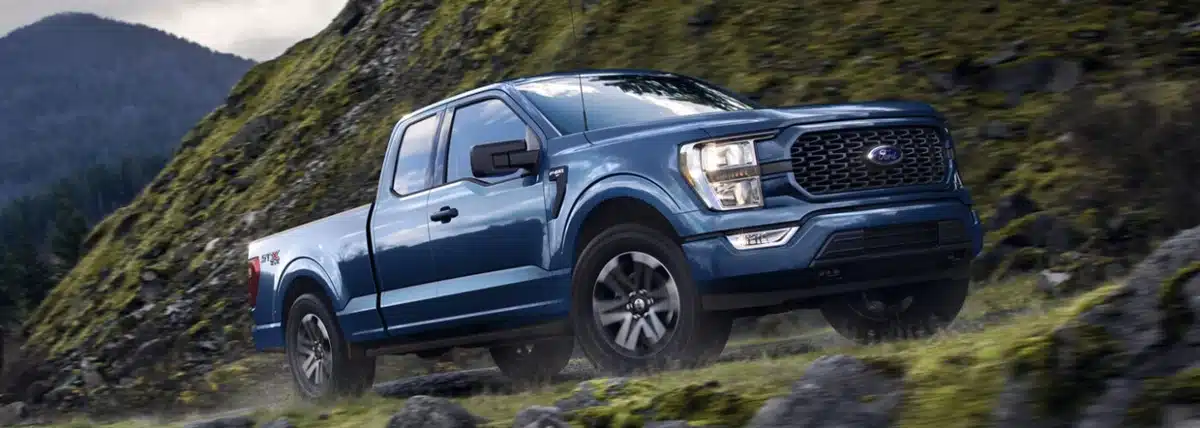
2026 F-150 Bed Sizes
If you want the “most people, most jobs, most towing” bed: 6.5-foot is the safest all-around pick.
If you want easy parking and daily driving, while still towing well: 5.5-foot is the practical choice.
If you routinely haul long materials (lumber, pipe, ladders) and you want maximum bed utility: 8.0-foot is the work-first option (with the tradeoff of more length to maneuver).
📊 Comparison table (use this to decide fast)
| Bed sizeInside length (floor)Cargo box volumeBest forWatch-outs | ||||
|---|---|---|---|---|
| 5.5 ft | 67.1 in | 52.8 cu ft | Daily driving + weekend hauling + towing moderate trailers | Less “lay-flat” room for long materials. |
| 6.5 ft | 78.9 in | 62.3 cu ft | The best balance for work + towing | Slightly longer wheelbase/overall length depending on cab. |
| 8.0 ft | 97.6 in | 77.4 cu ft | Full jobsite hauling, long materials, fewer tailgate-down loads | Longest footprint; configuration availability is limited vs other beds. |
Ford lists the same key bed width and depth across these beds: 50.6 in between wheelhouses and 21.4 in inside height.
📏 2026 F-150 bed sizes (official dimensions that matter)
Most buyers focus on “5.5 vs 6.5 vs 8.”
For work and towing, the useful measurements are:
1) Bed length at the floor (your real loading length)
- 5.5 ft bed: 67.1 inches
- 6.5 ft bed: 78.9 inches
- 8.0 ft bed: 97.6 inches
2) Width between wheelhouses (fits sheets, toolboxes, pallets)
Ford lists 50.6 inches between wheelhouses.
That means many “48-inch” materials (like 4×8 sheet goods) can sit between the wheel wells, depending on how you position and secure the load.
3) Cargo box volume (useful for loose bulk)
- 5.5 ft: 52.8 cu ft
- 6.5 ft: 62.3 cu ft
- 8.0 ft: 77.4 cu ft
For ad placement and readability, here’s the simple volume difference:
The 6.5 adds roughly +9.5 cu ft over the 5.5.
The 8.0 adds roughly +15.1 cu ft over the 6.5.
🛠️ Best bed size for work tasks (real-world use)
✅ 5.5-foot bed: best for daily driving + light/medium hauling
The 5.5-foot bed is the easiest to live with day-to-day.
If your “work” loads are typically:
Tool bags, small toolboxes, jobsite consumables, pressure washer, small generator, or a few bins—5.5 is usually enough.
Where 5.5 starts to feel small is “long and awkward” material:
8-foot lumber, pipe, ladders, or long trim will often force tailgate-down hauling and more tie-down management.
That’s not unsafe by default, but it’s less convenient and can increase how often you need to re-check straps.
✅ 6.5-foot bed: best balance of real work utility
This is the bed that “solves problems” without turning your truck into a parking-lot project.
In practice, 6.5 is the sweet spot when you:
Haul more often than you tow.
Tow more often than you haul long materials.
Need enough bed length that you aren’t living with the tailgate down.
Ford’s own specs show the 6.5 adds meaningful floor length (78.9″) and volume (62.3 cu ft) while keeping bed width and height consistent.
✅ 8.0-foot bed: best for long material, fewer compromises
If you regularly haul:
8-foot lumber, conduit, pipe, ladders, scaffolding planks, long trim, or bulky jobsite items—an 8-foot bed is the only configuration that routinely feels “made for it.”
With 97.6 inches of floor length and 77.4 cu ft of box volume, it’s the clear work-maximizer.
The tradeoff is footprint.
Long-bed trucks are simply bigger to maneuver in tight city work zones, small driveways, and parking garages.
🚚 Best bed size for towing (what actually changes)
Towing “feel” is influenced by several things, but bed size mainly affects towing in two ways:
1) Wheelbase (stability) vs maneuverability (turning/parking)
Ford lists different wheelbases by bed length and cab style.
For example, Ford’s 2026 spec tables show wheelbase figures including 122.8 in, 145.4 in, and 157.2 in depending on configuration and box.
In general terms:
Longer wheelbase tends to feel more planted at speed with a longer trailer.
Shorter wheelbase tends to be easier to park and easier to maneuver in tight spaces.
2) Payload behavior (tongue weight + cargo in the bed)
Tongue weight (the downward load at the hitch) competes directly with how much you can carry in the bed.
If your towing style is “family in the cab + gear in the bed + travel trailer,” you want the bed that helps you keep gear organized without stacking weight poorly.
This is less about bed length and more about how you actually load and secure—bed length just makes it easier or harder to place weight forward of the rear axle and keep things tidy.
🎯 Match the bed to your trailer type
Travel trailer (RV) owners
Most travel trailer owners care about:
Stability at highway speeds.
Room for camping gear, coolers, bikes, firewood, and bins.
A 6.5-foot bed usually makes this easiest—more space than 5.5, without the long-bed footprint.
If you tow a longer travel trailer and you also haul a lot of gear, the extra space in the 6.5 (and especially the 8.0) becomes a quality-of-life upgrade.
Boat owners
Boats (especially on bunk trailers) often tow “cleaner” than tall RVs.
If your main goal is easy backing and easy daily use, a 5.5 bed can be a great pairing.
If you haul fishing gear, rods, coolers, and wet storage bins, 6.5 becomes the comfort choice.
Equipment trailer / utility trailer for work
If you haul tools and materials in the bed and tow equipment behind you, 6.5 is again the all-around best.
If you regularly carry long materials and tow, 8.0 is the most efficient setup for load management.
✅ Practical recommendations: which bed should you buy?
Buy the 5.5-foot bed if you want…
A truck that feels like a daily driver first.
Easy parking.
You tow occasionally or tow shorter trailers.
You rarely haul long materials.
Ford’s 5.5 bed dimensions (67.1″ floor length; 52.8 cu ft) are simply optimized for “normal life + light hauling.”
Buy the 6.5-foot bed if you want…
The most versatile “work + towing” package.
More floor length for jobsite loads (78.9″) and more loose volume (62.3 cu ft)
A configuration that can tow confidently while still being easy enough to live with.
Buy the 8.0-foot bed if you want…
Maximum bed utility.
The fewest “tailgate down” compromises.
More ability to keep loads flat and strapped correctly.
Ford lists 97.6″ floor length and 77.4 cu ft volume for the 8-foot bed.
✅ Quick “jobsite fit” checklist (copy/paste friendly)
Before you choose:
- Do you routinely haul 8-foot materials (lumber, pipe, ladder)?
If yes, lean 8.0, or be honest that you’ll tailgate-haul constantly.
- Do you often carry sheet goods?
Ford lists 50.6″ between wheelhouses, which helps with many 48-inch materials.
- Do you tow a travel trailer and also carry lots of gear?
Lean 6.5.
- Do you need garage parking and city maneuverability?
Lean 5.5.
- Do you want the most “no regrets” choice for mixed use?
Pick 6.5.
- 2026 Ford F-150 official specs and cargo box dimensions https://www.ford.com/
- Car and Driver: 2026 F-150 overview (cab/bed availability) Car and Driver
❓ FAQs
What bed sizes are available on the 2026 F-150?
Ford lists three cargo box styles: 5.5-ft Styleside, 6.5-ft Styleside, and 8.0-ft Styleside, with corresponding inside floor lengths of 67.1″, 78.9″, and 97.6″.
How much bigger is the 6.5 bed than the 5.5 bed?
Ford lists cargo box volume at 52.8 cu ft (5.5) vs 62.3 cu ft (6.5), and floor length at 67.1″ vs 78.9″.
Which bed is best for towing?
For most owners, 6.5 is the best combination of stability, cargo management, and livability.
Ford’s published wheelbase values vary by configuration and box, which is one reason longer bed setups can feel more planted at speed.
Which bed is best for work?
If your work regularly involves long materials, the 8.0 is the best work bed because it offers the most floor length and cargo volume.
🏁 Conclusion
If you want the most practical 2026 F-150 for work + towing, the 6.5-foot bed is the strongest default choice.
It gives you meaningfully more usable length and volume than the 5.5, while avoiding the long-bed maneuverability tradeoffs of the 8.0.
If you want, tell me your use case (work materials + trailer type + typical loaded trailer weight), and I’ll recommend the best cab/bed pairing and the “don’t-miss” towing setup items.
Reminder: Like and comment with whether you’re towing an RV, boat, or equipment trailer—and what you haul in the bed most often, and stop by again Truck Report Geeks.