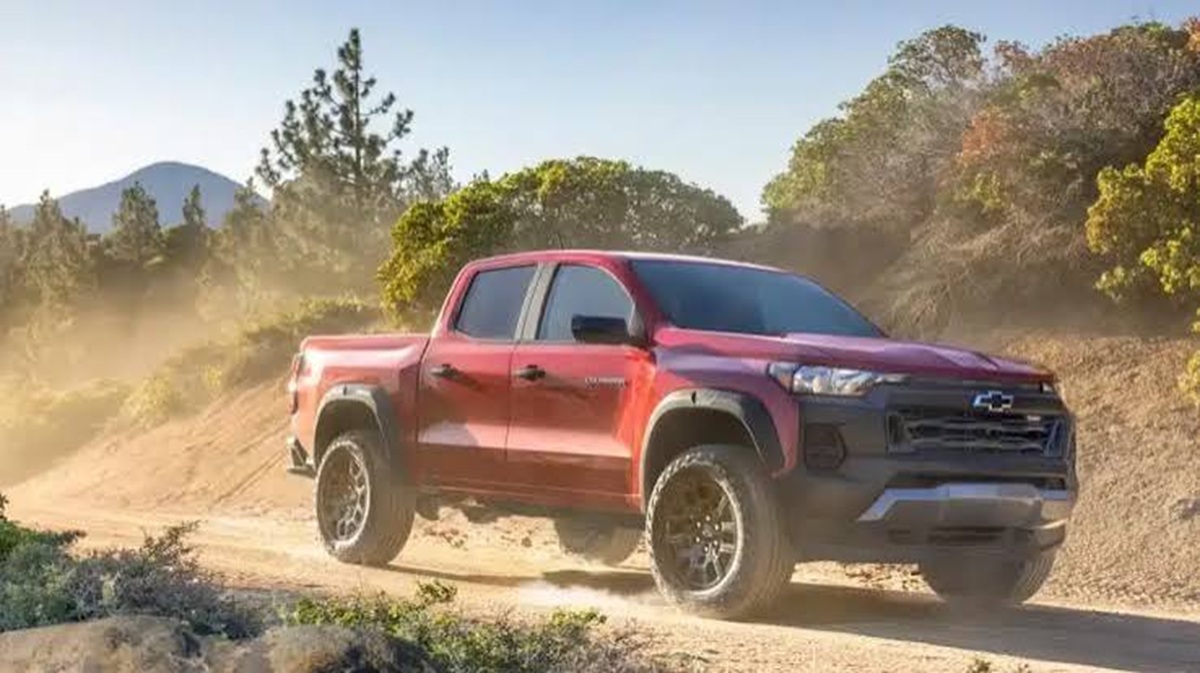
2027 Chevy Colorado & GMC Canyon Get a Major 2.7L TurboMax Engine Upgrade
GM isn’t giving the 2027 Chevy Colorado and GMC Canyon a bigger engine.
Instead, it’s making the 2.7-liter TurboMax significantly more powerful.
For 2027, the Colorado and Canyon are getting an upgraded version of GM’s 2.7L TurboMax engine, and the numbers are impressive.
The new engine produces 350 horsepower and 455 lb-ft of torque.
That’s a substantial increase over the outgoing engine’s 310 horsepower and 430 lb-ft of torque.
In other words, the 2027 Colorado and Canyon gain 40 horsepower and 25 lb-ft of torque without increasing engine displacement.
And there’s another interesting part of this story.
Even though the engine is considerably more powerful, the maximum towing capacity isn’t increasing.
So what exactly did GM change?
Is this really a new engine?
And what does the extra power mean for people who use their Colorado or Canyon for towing?
Let’s take a closer look.
🔧 The 2027 Colorado and Canyon Get the New L4B TurboMax
The 2.7-liter TurboMax has become one of the most important engines in GM’s truck lineup.
It has been used in the Chevrolet Colorado, GMC Canyon, Chevrolet Silverado 1500 and GMC Sierra 1500.
For the current Colorado and Canyon, the engine produces 310 horsepower and 430 lb-ft of torque.
For 2027, GM is moving to a new engine designation.
The outgoing L3B is being replaced by the L4B TurboMax.
But this isn’t simply a new name.
GM has made several hardware changes to the engine.
The upgraded L4B receives a new turbocharger, upgraded fuel injection, improved active thermal management and redesigned pistons.
Those changes allow GM to increase output to:
350 horsepower
455 lb-ft of torque
That’s a 40-horsepower increase and a 25 lb-ft increase in torque.
And it all comes from the same basic 2.7-liter engine family.
📊 2026 vs. 2027 Colorado and Canyon Engine
| Specification | 2026 Colorado/Canyon | 2027 Colorado/Canyon |
|---|---|---|
| Engine | 2.7L TurboMax L3B | 2.7L TurboMax L4B |
| Horsepower | 310 hp | 350 hp |
| Torque | 430 lb-ft | 455 lb-ft |
| Horsepower increase | — | +40 hp |
| Torque increase | — | +25 lb-ft |
| Transmission | 8-speed automatic | 8-speed automatic |
| Maximum towing | Up to 7,700 lbs | Up to 7,700 lbs |
The current 2.7L TurboMax produces 310 horsepower and 430 lb-ft of torque in the Colorado.
The new L4B takes those numbers to another level for 2027.
And that makes the Colorado and Canyon particularly interesting in the midsize truck market.
🚀 350 Horsepower From a 2.7-Liter Four-Cylinder
The biggest headline here is obviously the horsepower.
350 horsepower from a 2.7-liter four-cylinder is a serious amount of power.
The outgoing engine already produced 310 horsepower.
For 2027, GM adds another 40 horsepower.
That’s roughly a 13% increase in horsepower without increasing the engine’s displacement.
Torque also increases from 430 lb-ft to 455 lb-ft.
For truck owners, that torque number may actually be more important than the horsepower number.
Horsepower gets the attention.
Torque is what helps a truck get moving when there’s a trailer attached behind it.
It’s also important when accelerating onto a highway, climbing grades or carrying a heavier load.
The 2027 L4B produces its peak torque at 3,000 rpm, while maximum horsepower arrives at 5,200 rpm.
That should give the Colorado and Canyon plenty of low- and mid-range muscle for everyday truck use.
⚙️ What’s Actually Different About the New L4B?
This is where the 2027 engine upgrade becomes more interesting.
GM isn’t simply increasing boost pressure and changing the computer calibration.
The L4B includes several mechanical and supporting-system changes.
The engine receives a new turbocharger designed to support the increased output.
GM has also upgraded the fuel injection system.
The engine’s active thermal management system has been improved as well.
And GM has redesigned the pistons.
These changes are important because an engine producing 350 horsepower and 455 lb-ft of torque needs to manage considerably more heat and cylinder pressure than the earlier version.
The goal isn’t simply to make a big horsepower number.
The engine still has to deliver that power while meeting emissions requirements, managing temperatures and providing the drivability expected from a modern pickup.
That’s why the 2027 L4B is more interesting than a simple software update.
🛻 Does the 2027 Colorado Tow More?
Here’s where things get interesting.
You might expect a truck that gains 40 horsepower and 25 lb-ft of torque to receive a higher towing rating.
That’s not happening.
Current published information indicates that the maximum towing capacity remains 7,700 pounds when properly equipped.
That’s the same maximum figure associated with the outgoing Colorado and Canyon.
So why give the truck more power if it can’t tow a heavier trailer?
Because engine power and towing capacity aren’t the same thing.
A truck’s maximum tow rating depends on much more than horsepower.
GM also has to consider the transmission, cooling system, brakes, chassis, suspension, tires, axle gearing, vehicle weight and other factors when establishing a certified towing rating.
The extra horsepower can therefore make the truck feel stronger while towing without changing the maximum trailer weight it’s legally and mechanically rated to pull.
That’s an important distinction.
The 2027 Colorado may have more power available when you’re pulling a trailer.
That doesn’t mean you can automatically increase your trailer weight.
Always use the towing rating for the exact truck configuration.
🏕️ Off-Road Colorado Models Have Lower Tow Ratings
There’s another important point for Colorado buyers.
The 7,700-pound maximum does not apply to every version of the truck.
The off-road-focused Colorado ZR2 has a lower maximum towing rating of 6,000 pounds.
The ZR2 Bison is rated at 5,500 pounds.
That’s because these trucks carry additional off-road equipment and have different configurations.
The same basic rule applies to the GMC Canyon.
The Canyon AT4X and AT4X AEV Edition have lower towing limits than the configurations capable of reaching the maximum 7,700-pound rating.
So if towing is your main reason for buying a Colorado or Canyon, don’t simply look at the 350-horsepower engine.
Look at the towing rating of the exact trim, drivetrain and equipment package you’re considering.
🔄 The Colorado and Canyon Keep the 8-Speed Automatic
There’s another interesting difference between the midsize trucks and the full-size Silverado and Sierra.
The 2027 Chevrolet Silverado 1500 and GMC Sierra 1500 are also getting the enhanced L4B TurboMax.
However, those full-size trucks pair the engine with a 10-speed automatic transmission.
The Colorado and Canyon continue using the 8-speed automatic.
That means GM isn’t simply taking the Silverado powertrain and dropping it into the Colorado.
The midsize trucks are getting the upgraded L4B engine while retaining their existing eight-speed transmission strategy.
That could make for some interesting real-world comparisons once the 2027 trucks are being tested by owners and automotive publications.
📈 How Much Has GM’s 2.7L Engine Changed?
The history of GM’s 2.7-liter turbocharged engine is actually pretty interesting.
When the current-generation Colorado arrived, GM offered different versions of the 2.7L engine.
Some versions produced significantly less power than today’s TurboMax.
GM eventually moved toward the 310-horsepower, 430-lb-ft version as the primary Colorado and Canyon powertrain.
Now the latest version pushes output to 350 horsepower and 455 lb-ft.
The Evolution of GM’s 2.7L
| 2.7L Version | Horsepower | Torque |
|---|---|---|
| Early 2.7L Turbo | 237 hp | 259 lb-ft |
| 2.7L Turbo Plus | 310 hp | 390 lb-ft |
| 2.7L High Output | 310 hp | 430 lb-ft |
| 2027 L4B TurboMax | 350 hp | 455 lb-ft |
That’s a significant evolution without increasing displacement.
And it shows how much manufacturers are getting out of relatively small turbocharged engines.
🆚 How Does 350 Horsepower Compare With Other Midsize Trucks?
The 2027 Colorado and Canyon are entering a midsize truck market where manufacturers are taking performance increasingly seriously.
The Toyota Tacoma i-FORCE MAX hybrid produces 326 horsepower and 465 lb-ft of torque.
The Ford Ranger’s available 2.7-liter EcoBoost V6 produces 315 horsepower.
The Nissan Frontier’s 3.8-liter V6 produces 310 horsepower.
The Honda Ridgeline’s 3.5-liter V6 produces 280 horsepower.
And then there’s the performance-oriented Ford Ranger Raptor.
The Ranger Raptor’s twin-turbo 3.0-liter V6 produces 405 horsepower, putting it above the Colorado and Canyon in outright horsepower.
But the regular Colorado and Canyon are not performance-specialty models.
The interesting part is that GM is now offering 350 horsepower in its mainstream midsize trucks.
That’s a lot of power for a truck that isn’t marketed as a dedicated high-performance model.
💪 The Torque Number May Be Even More Important
The 455 lb-ft torque figure deserves some attention.
The 2027 Colorado and Canyon produce more torque than the 405-horsepower Ranger Raptor.
The Tacoma i-FORCE MAX remains slightly higher at 465 lb-ft.
But Toyota gets there using a hybrid powertrain.
GM is producing 455 lb-ft from a turbocharged four-cylinder engine.
That’s an impressive figure.
It also demonstrates just how much midsize truck powertrains have changed.
Not that long ago, a 2.7-liter four-cylinder producing more than 450 lb-ft of torque would have seemed unusual.
Now it’s becoming part of the mainstream midsize pickup market.
🏕️ What Does the Extra Power Mean for Towing?
If you’re a truck owner who regularly pulls a camper, boat or utility trailer, the new engine should be interesting.
But it’s important to keep expectations realistic.
The maximum towing rating isn’t increasing.
Instead, the extra power should give the truck more performance within its existing towing limits.
That could mean stronger acceleration when merging onto a highway.
It could mean less effort when climbing grades.
And it could give the transmission more engine output to work with when the truck is carrying or pulling a substantial load.
Those benefits don’t require a higher tow rating.
Think about it this way.
If your trailer weighs 5,000 pounds, you don’t necessarily need a truck that is rated for 8,000 pounds to benefit from having more horsepower.
The extra power can make pulling that same 5,000-pound trailer easier.
But you still need to stay within the truck’s official towing, payload and axle ratings.
⚠️ Don’t Forget About Payload
This is something that often gets overlooked when people talk about towing.
Your truck can have a 7,700-pound maximum trailer rating and still be limited by payload.
Passengers, cargo, hitch weight and trailer tongue weight all count against the truck’s available payload.
For example, if you put several passengers, tools and equipment into the truck, you have less payload available for trailer tongue weight.
That’s why a truck’s maximum tow rating isn’t necessarily the number you should use for every towing situation.
The door-jamb certification label and owner’s manual for your exact truck are the numbers that matter.
This is especially important with off-road models because additional equipment can reduce available payload and towing capacity.
🏔️ What About the Colorado ZR2?
The Colorado ZR2 remains one of the most interesting versions of the truck.
It’s designed for buyers who want serious off-road capability rather than simply maximum towing.
The ZR2 features specialized suspension hardware, larger off-road tires, increased ground clearance and other equipment designed to improve performance away from pavement.
For 2027, the new L4B engine gives that formula another 40 horsepower.
That’s potentially a meaningful improvement when climbing steep terrain or accelerating through loose surfaces.
But again, the ZR2’s towing rating remains lower than the maximum available on other Colorado configurations.
That’s an important reminder that horsepower isn’t the only factor that determines what a truck can do.
🚚 What About the GMC Canyon?
The 2027 GMC Canyon follows essentially the same powertrain formula.
The Canyon gets the new 2.7L TurboMax L4B.
It produces:
350 horsepower
455 lb-ft of torque
And it continues using the eight-speed automatic transmission.
That means there isn’t a major engine-performance difference between a Colorado and Canyon.
The decision between the two is going to come down more to styling, trim levels, equipment, pricing and the overall character of the truck.
Underneath, however, they’re closely related.
🔧 Is the New L4B Engine More Reliable?
This is a question we should be careful with.
The answer is simply that it’s too early to know.
The 2027 L4B is an updated engine with several important changes.
GM has redesigned components and changed the turbocharger, fuel injection and thermal-management systems.
Those changes are intended to support the higher output and improve the overall powertrain.
But there isn’t enough long-term real-world data yet to say how the engine will perform after five, eight or ten years of ownership.
That’s something we’ll learn from owners over time.
So I wouldn’t tell buyers that the L4B is automatically more reliable than the L3B.
I also wouldn’t say the opposite.
The responsible answer is that the engine is new enough that long-term durability remains something to watch.
⛽ What About Fuel Economy?
This is another area where it’s better to wait for official EPA numbers rather than make assumptions.
You might think adding 40 horsepower automatically means fuel economy will get worse.
But that’s not necessarily how modern engine development works.
The new L4B has changes to its turbocharger, fuel system and thermal management.
GM isn’t simply trying to make the engine more powerful.
It still has to meet emissions and efficiency requirements.
Final fuel-economy ratings can also vary depending on drivetrain, tires, trim and equipment.
So once the official 2027 EPA ratings are available for each configuration, that will give us a much better picture.
💰 Should You Wait for the 2027 Colorado or Canyon?
If you’re already shopping for a Colorado or Canyon, the 2027 model deserves a close look.
This isn’t simply a new grille or a different wheel design.
The engine itself is getting meaningful changes.
You’re going from:
310 horsepower → 350 horsepower
and:
430 lb-ft → 455 lb-ft
That’s a substantial improvement.
At the same time, the maximum towing rating remains up to 7,700 pounds for properly equipped configurations.
So the biggest reason to consider the 2027 model isn’t that GM suddenly gave the Colorado a higher tow rating.
It’s that GM gave the truck considerably more power within the same basic midsize pickup package.
For people who tow, haul or simply want stronger acceleration, that’s a meaningful change.
❓ 2027 Chevy Colorado and GMC Canyon Engine FAQs
What engine does the 2027 Chevy Colorado have?
The 2027 Chevrolet Colorado uses an upgraded 2.7L TurboMax turbocharged four-cylinder engine known as the L4B
How much horsepower does the 2027 Colorado have?
The 2027 Colorado produces 350 horsepower from its upgraded 2.7L TurboMax.
How much torque does the 2027 Colorado have?
The new engine produces 455 lb-ft of torque.
Does the 2027 Colorado tow more than the 2026 model?
No.
Current published information indicates that maximum towing remains up to 7,700 pounds when properly equipped.
Individual trims can have lower ratings.
How much can the Colorado ZR2 tow?
The Colorado ZR2 is rated for up to 6,000 pounds, while the ZR2 Bison is rated for up to 5,500 pounds
Does the 2027 GMC Canyon have the same engine?
Yes.
The 2027 Canyon receives the same upgraded 2.7L TurboMax L4B engine producing 350 horsepower and 455 lb-ft of torque.
Does the Colorado get the Silverado’s 10-speed transmission?
No.
The Colorado and Canyon continue using an eight-speed automatic, while the enhanced TurboMax in the full-size Silverado and Sierra is paired with a 10-speed automatic.
Is the 2027 L4B a completely new engine?
It’s an upgraded version of GM’s 2.7L TurboMax engine family rather than an entirely new engine architecture.
GM has made significant changes to components including the turbocharger, fuel injection system, thermal management and pistons.
Is the 2027 Colorado the most powerful midsize truck?
Not overall.
The 350-horsepower Colorado and Canyon are very powerful mainstream midsize pickups, but the Ford Ranger Raptor produces 405 horsepower.
The Toyota Tacoma i-FORCE MAX produces 326 horsepower and 465 lb-ft of torque.
🏁 Final Thoughts
The 2027 Chevrolet Colorado and GMC Canyon are getting something that truck buyers should pay attention to.
More power.
Not from a bigger engine.
Not from adding more cylinders.
But from an upgraded version of the same basic 2.7-liter TurboMax engine family.
The new L4B produces 350 horsepower and 455 lb-ft of torque.
That’s 40 more horsepower and 25 more lb-ft of torque than the outgoing engine.
GM has also made meaningful hardware changes, including a new turbocharger, upgraded fuel injection, improved thermal management and redesigned pistons.
But there’s one thing the extra power doesn’t change.
The maximum towing capacity remains up to 7,700 pounds for properly equipped models.
So don’t look at the new 350-horsepower engine and assume the Colorado or Canyon can suddenly pull a heavier trailer.
Instead, think of it as giving the truck more muscle within its existing capabilities.
That could make a noticeable difference when accelerating with a trailer, climbing grades or carrying a heavy load.
And for buyers who simply want a stronger midsize pickup, 350 horsepower and 455 lb-ft of torque is certainly an impressive combination.
The 2027 Colorado and Canyon are proving that you don’t necessarily need a V6 or a larger engine to get serious truck performance.
The real question now is how this new L4B TurboMax performs in the real world.
Once owners start putting miles on these trucks, towing trailers and driving them through different conditions, we’ll get a much better idea of what this new engine is really capable of.
For now, though, one thing is clear.
The 2027 Chevy Colorado and GMC Canyon just got a whole lot more interesting.
Sources
GM Authority — 2027 Colorado and Canyon power increase
This is the most directly relevant source. It specifically covers the 2027 Colorado/Canyon L4B, the 350-hp output, 455-lb-ft figure, and the eight-speed transmission.
2027 Chevy Colorado, GMC Canyon Get Power and Torque Increases — GM Authority