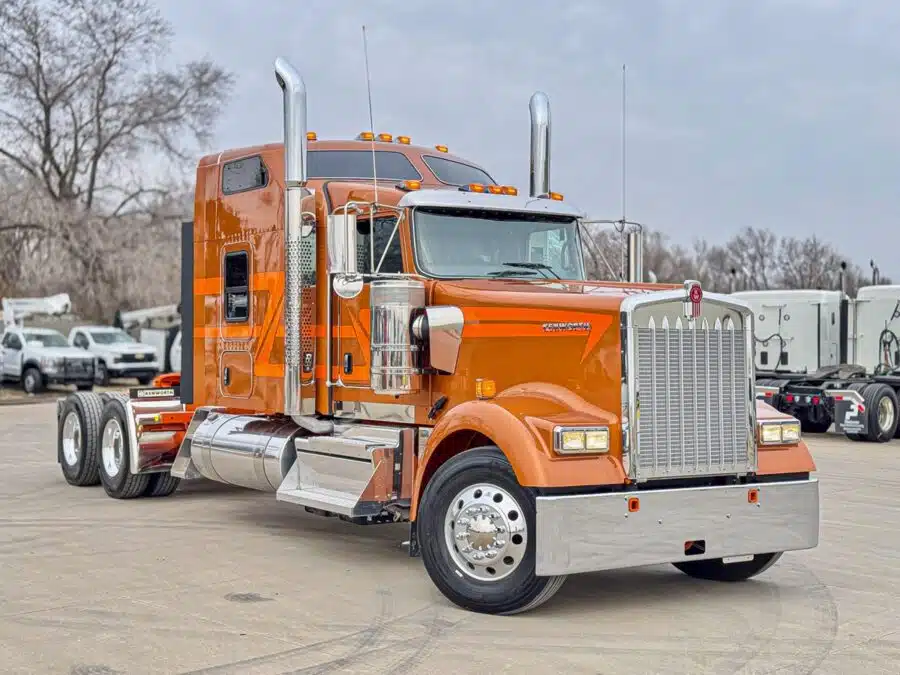
2026 Semi Trucks
If you’re shopping 2026 semi trucks, the decision is less about the badge and more about duty cycle fit: long-haul vs regional, gross combination weight, terrain, idle time, fuel strategy, driver comfort, and service network.
This guide breaks down the key 2026 Class 8 on-highway tractors (plus the most relevant vocational/on-highway crossovers and emerging zero-emission options), with practical spec ranges and buying checkpoints so you can spec correctly the first time.
What “2026 Semi Truck” Usually Means
Most buyers mean a Class 8 tractor (day cab or sleeper) designed to pull a semi-trailer under federal and state/provincial weight rules.
In North America, common legal interstate gross limits are 80,000 lb (subject to axle spacing and the bridge formula), so your axle ratings, wheelbase, and trailer setup matter as much as horsepower.
If you want model-by-model ownership tips, spec checklists, and fleet-focused buying guidance, start here on TruckReportGeeks.com semi-truck buying resources.
The Quick Reality Check Before You Pick a Model
🧭 1) Duty cycle first, brand second.
A long-haul sleeper pulling 53′ van is a different machine than a heavy tanker, flatbed, or high-GCW spec.
⛽ 2) Fuel economy lives in the whole combination.
Aero packages, drivetrain ratios, and trailer setup routinely decide cost-per-mile more than a small horsepower delta.
🧰 3) Uptime is an option you buy.
Dealer density, parts availability, and shop familiarity can be more valuable than any single feature.
🛏️ 4) Driver comfort is retention.
Cab noise, HVAC performance, storage, and bedding layout impact turnover, which is a real operating cost.
🧠 5) Advanced safety is becoming table stakes.
Most OEMs now treat collision mitigation, lane support, and adaptive cruise as core fleet tools.
2026 Semi Truck Comparison Table (High-Level)
| OEM / Brand Family | Core 2026 On-Highway Models | Best Fit | Typical Engine Ecosystem | Notable Strength |
|---|---|---|---|---|
| Freightliner (Daimler) | Cascadia | Long-haul / fleet standardization | Detroit DD13/DD15; some Cummins availability by spec | Broad adoption, fuel-efficiency focus |
| Western Star (Daimler) | 57X | On-highway with vocational DNA | Detroit DD13/DD15/DD16 | Rugged spec flexibility |
| Volvo Trucks | VNL | Long-haul efficiency + driver comfort | Volvo D13 + I-Shift | Integrated powertrain + driver-centric cab |
| Mack | Anthem (and successor transition in some markets) | Highway/regional with Mack durability | Mack MP engines + mDRIVE | Robust chassis/powertrain character |
| Kenworth (PACCAR) | T680, W990 | T680: aero long-haul; W990: premium conventional | PACCAR MX-series + Cummins options by spec | Spec breadth + strong dealer network |
| Peterbilt (PACCAR) | 579, 589 | 579: aero/fleet; 589: classic long-hood | PACCAR MX-series + Cummins options | Resale + driver appeal |
| International (International Motors) | LT Series | Fleet long-haul/regional value | International S13 / Cummins X15 | Competitive total-cost positioning |
Model-by-Model: The Major 2026 Players
Freightliner Cascadia (2026)
🛣️ What it is: The dominant fleet long-haul tractor platform in many regions, optimized around total cost of ownership and aero-driven efficiency.
🔧 Common powertrain range: Detroit DD13 and DD15 are mainstream offerings, with horsepower and torque ranges that cover most van, reefer, and general freight specs.
🛏️ Cab/sleeper strategy: Day cab, mid-roof, and raised-roof sleeper configurations are commonly offered to match long-haul vs regional needs.
🧠 Why buyers choose it: High fleet standardization potential, large service footprint, and a mature ecosystem for safety/telematics and spec optimization.
For factory spec ranges, start with the OEM spec page: Freightliner Cascadia specifications.
Western Star 57X (2026)
🚧 What it is: A highway tractor with more vocational toughness than typical aero-only designs, often chosen by fleets that mix highway miles with harsher operating conditions.
🔩 Engine coverage: Detroit DD13/DD15/DD16 offerings span from moderate fleet specs through heavier, high-torque configurations.
🧲 Where it shines: If you want an on-highway truck that tolerates more jobsite variability (or higher abuse tolerance) while keeping modern aerodynamics and modern driver aids.
Volvo VNL (2026)
🧊 What it is: Volvo’s flagship on-highway tractor, positioned around an integrated powertrain approach and a driver-friendly cab environment.
⚙️ Powertrain theme: Volvo D13 with the I-Shift automated manual is central to the platform’s efficiency story.
🛞 Spec flexibility: Wheelbases and axle configurations are typically spec’d to match regional vs long-haul and different trailer types.
For official spec framing, use: Volvo VNL specifications.
Mack Anthem (2026)
🦾 What it is: A highway/regional tractor with a durability-forward feel, commonly paired with Mack’s automated manual transmission strategy.
🛠️ Key theme: Mack emphasizes powertrain integration (MP engines and mDRIVE) and claims meaningful efficiency improvements tied to aero and engine updates.
🧩 What to watch in 2026: Depending on region and ordering cycles, some buyers will be cross-shopping around platform transitions and availability timing.
Kenworth T680 (2026)
🌬️ What it is: Kenworth’s aero long-haul workhorse—often selected when fleets want strong spec variety, a large dealer footprint, and a modern efficiency platform.
🔧 Powertrain overview: PACCAR MX-series engines are commonly featured, with automated transmission integration and efficiency-oriented drivetrain options.
🧭 Who it fits: Dry van, reefer, and general freight fleets trying to dial in fuel economy without giving up driver comfort and service accessibility.
Reference page: Kenworth T680 overview.
Kenworth W990 (2026 buyers cross-shop it heavily)
🧱 What it is: A premium conventional long-hood platform that still targets highway work but prioritizes driver appeal, presence, and traditional configuration options.
🧠 Why it matters in an “all models” guide: Many owner-operators (and some fleets) cross-shop W990-style trucks specifically for retention, resale, and driver satisfaction, even when pure aero tractors benchmark higher on fuel.
Peterbilt 579 (2026)
🛰️ What it is: Peterbilt’s technology-forward aero highway tractor, frequently found in long-haul and regional fleet service.
🔧 Spec envelope: High horsepower and torque ceilings are available, with sleeper size ranges that cover regional sleepers through full long-haul layouts.
For the OEM snapshot: Peterbilt 579 specs.
Peterbilt 589 (2026)
🏁 What it is: The heritage-style long-hood successor format that caters to classic-spec buyers who still want modern powertrain options and a new-truck warranty story.
📌 Why it exists: Strong driver preference, styling, and resale dynamics can outweigh incremental aero differences depending on lane rates, annual miles, and operating philosophy.
International LT Series (2026)
💼 What it is: A mainstream fleet tractor platform with a strong emphasis on competitive acquisition cost and total operating economics when correctly spec’d.
🧰 Engine lineup framing: International’s current LT positioning highlights its in-house engine option and Cummins availability by configuration.
For the OEM overview: International LT Series.
Specs That Actually Decide the Truck
1) Engine and Torque Strategy (Not Just Horsepower)
🔻 Long-haul efficiency often favors a torque curve that supports lower RPM cruise and fewer downshifts on rolling grades.
🧱 Heavy haul or mountainous routes push you toward higher torque ratings, robust cooling packages, and driveline durability options.
Most major on-highway platforms list torque ceilings up to the ~2,050 lb-ft class depending on engine family and rating.
2) Transmission: AMT vs Manual (and Why AMT Dominates Fleets)
⚙️ Automated manuals (AMTs) have become the fleet default because they reduce training variability, protect the driveline, and can improve consistency in fuel economy.
Volvo’s I-Shift and Mack’s mDRIVE are emblematic of the OEM-integrated AMT strategy, while Detroit DT12 and PACCAR automated options serve similar roles in their ecosystems.
3) Axle Configuration: 6×4 vs 6×2 vs 4×2
🛞 6×4 remains the all-conditions standard for traction and broad compatibility.
📉 6×2 can reduce parasitic losses and weight, improving fuel economy in some duty cycles, but demands careful traction and tire management planning.
🏙️ 4×2 is common in certain regional applications and lighter GCW use-cases, with tighter constraints.
4) Sleeper Size and Layout (Driver Economics)
It is an operating system for long-haul productivity: refrigeration, HVAC performance at idle, storage access, and bunk practicality all affect driver retention and trip quality.
Peterbilt’s published sleeper range on the 579 illustrates how wide the envelope can be (from compact sleepers to full long-haul sizes).
5) Weight and Wheelbase: Know Your Legal Operating Box
📏 Federal rules tie legal weight to axle limits and axle spacing, which is why wheelbase and axle spec must match your freight plan.
For the authoritative federal reference, use FHWA’s overview: Bridge formula and federal weight limits.
Zero-Emission and Alternative Power in the 2026 Conversation
Battery-electric and hydrogen discussions are real, but 2026 deployment remains lane- and infrastructure-dependent.
Freightliner publishes Class 8 battery-electric tractor specs under its eCascadia program, including GCW and battery capacity framing.
Tesla continues to publish Semi performance/range claims, while broader industry reporting has highlighted continued timelines and production uncertainty around scale-up timing.
For fleets exploring hydrogen specifically, note that OEM availability in this segment has been volatile, including high-profile financial distress among certain entrants—so verify current supportability, parts, and warranty pathways before committing.
If you want a practical framework for comparing diesel vs alternative powertrains (including what to ask about infrastructure, uptime, and residual risk), use TruckReportGeeks.com’s fleet decision guides.
2026 Buying Checklist (What to Ask Before You Sign)
✅ What is my real gross combination weight profile (average and worst-case)?
✅ How many starts/stops per day and how much idle time?
✅ What percentage of miles are flat vs rolling vs mountainous?
✅ Do I need maximum uptime (dense dealer network) or maximum spec customization?
✅ What’s my driver turnover risk, and what cab/sleeper features reduce it?
✅ What is my fuel strategy (diesel only, diesel + alt-fuel lanes, future ZEV)?
✅ What is my service plan (in-house, dealer, national accounts, mixed)?
FAQs
What is the “best” 2026 semi truck overall?
The best truck is the one that matches your duty cycle with the lowest cost-per-mile and highest uptime.
For many fleets, that ends up being a mainstream aero platform (Cascadia, VNL, T680, 579, LT) configured correctly for the lane and weight profile.
How much horsepower do I really need?
For most general freight at legal weights, you’re typically spec’ing for grade performance and cruise behavior, not bragging rights.
High torque and correct gearing frequently matter more than chasing peak horsepower.
Is a 6×2 worth it for fuel savings?
Sometimes, yes—especially in predictable highway lanes with strong traction planning and good maintenance discipline.
But if you routinely operate in snow, mud, steep grades, or unpredictable yard conditions, a 6×4 often pays for itself in reduced “stuck time” and better all-weather consistency.
Are electric semis a 2026 “yes” or “no”?
They can be a “yes” in specific lanes where charging, route length, dwell time, and payload tradeoffs pencil out
What legal weight should I assume for interstate operation?
A common federal framing is 80,000 lb on the Interstate System, but bridge formula and axle limits can drive lower legal limits depending on configuration.
Conclusion
For 2026, the semi-truck market is still anchored by Freightliner, Volvo, Kenworth, Peterbilt, International, and Mack, with each offering a viable path to a profitable spec when matched to the lane.
Your winning move is to spec around duty cycle, legal weights, uptime economics, and driver retention, then select the model whose dealer footprint and powertrain ecosystem best support that plan.
Reminder: If this helped, please like and comment so I know to produce the next 2026 semi-truck guide.