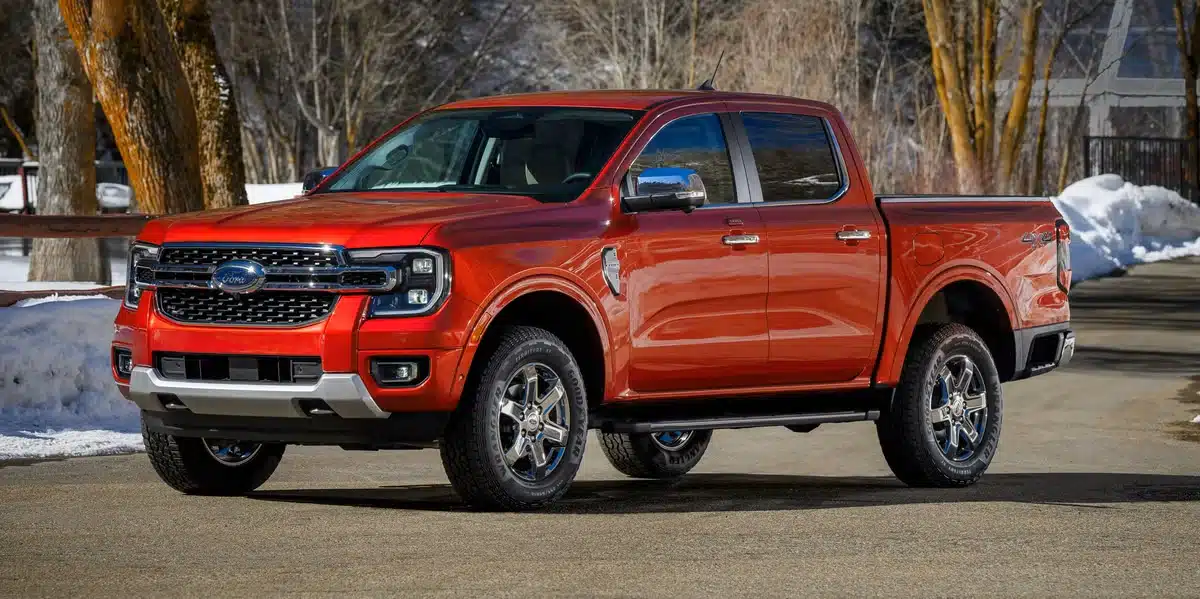
2026 Ford Ranger Truck Bed Dimensions
Choosing the right truck bed size for the 2026 Ford Ranger is critical — it affects what you can haul, how the truck maneuvers, and how useful the vehicle is for both daily tasks and larger loads.
In this article we break down the available bed lengths, width and height specs, payload considerations, cab and drivetrain impacts, and guide you through matching the right bed configuration to your hauling or cargo needs.
Whether you’re loading gear for weekend adventure, worksite tools, or planning on towing, understanding the bed dimensions helps avoid surprises.
⚙️ Bed Size Comparison Table
| Bed Option | Approx Length* | Width Between Wheel Wells | Approx Height* |
|---|---|---|---|
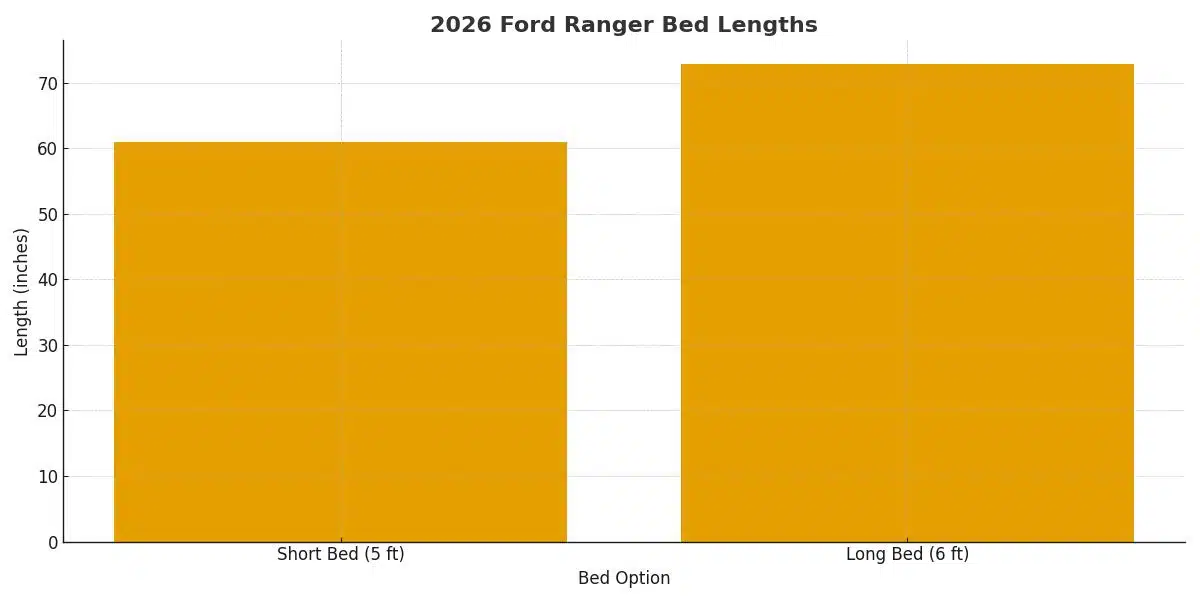
| 5-foot (Short) | ~61.0 in (5.1 ft) | ~44.8 in | ~20.8 in |
| 6-foot (Standard) | ~72.8 in (6.1 ft) | ~44.8 in | ~20.8 in |
*Figures are approximate and based on recent Ford Ranger bed size references; final 2026 Ford Ranger certified dimensions should be confirmed with official specs.
🚚 Bed Choice & Use-Case Implications
Opting for the shorter bed (around 5 ft) gives you a more maneuverable truck, easier parking, lighter weight, and is well-suited for urban use, general commuting, or moderate cargo loads.
Choosing the longer bed (~6 ft) boosts cargo length, allows larger items (length-wise) to fit better, and improves practicality for tools, lumber, outdoor gear or longer load items.
Bed length also influences payload and cargo volume; a longer bed may carry more load but might impact turn radius, overall vehicle length, and drive-off-road/parking convenience.
📏 Dimensions, Width & Volume Considerations
Length
- The short bed (~61 in) allows stacking smaller items, but large pieces or full-sized pallets may overhang.
- The longer bed (~72.8 in) accommodates longer cargo including full-sized sheets of material or larger equipment more easily.
Width
- Width between wheel wells is around ~44.8 in for many Ranger bed options, which means some standard pallets (48 in wide) will hang over slightly or require slight angling.
- Full width at the top of the box (above wheel wells) will be slightly wider than the wheel-well width; check official spec sheet for exact measurement.
Height
- Bed side-wall height is approx ~20.8 in for the known bed dimensions in similar Ranger data.
- High side-walls help contain cargo but may make loading heavier items more challenging.
Cargo Volume
- Approx cargo box volume for the 5-ft version ~43.3 cubic feet.
- Longer bed version offers around ~51.8 cubic feet in the referenced data.
⛽ Payload & Bed Length Interplay
When picking a bed size, remember: bed length influences payload and chassis design. Trucks with longer beds may carry longer loads but their payload capacity might be slightly reduced depending on configuration.
Selecting 4×4 vs 4×2, cab style (crew vs extended) and drivetrain all affect payload and bed size optimal use. Always check the specific truck’s payload rating in conjunction with bed size to ensure your intended cargo fits within safe limits.
🚚 Interior & Cab Configuration Impacts
Cab configuration (e.g., Crew Cab vs Extended) interacts with bed length:
- A Crew Cab with longer bed maximizes both passenger space and cargo length — optimal for dual-use work/family trucks.
- An extended or lower-cost cab with shorter bed may reduce bed length but reduce vehicle overall footprint and cost.
Consider how much passenger seating you require vs cargo bed needs when choosing.
📱 Bed Tech & Utility Features
Modern trucks like the Ranger offer bed-specific features beyond raw dimensions such as:
- Tie-down cleats and bed anchors
- Integrated LED bed lighting
- Optional bed step or tailgate assist
- Available drop-in bedliners, spray-in liners, modular cargo systems
Selecting the right features helps maximize the usefulness of the bed beyond just size.
🛡 Safety & Cargo Handling Considerations
With a truck bed full of gear, safety isn’t just about towing — it’s about how the load is managed. Key considerations:
- Ensure weight is properly distributed: heavier items toward front of bed, and side-to-side balance.
- Consider the height and side-wall — heavy items may need lower clearance or assist in loading.
- Verify vehicle’s load limit and payload, and use proper tie-downs to prevent shifting.
- For longer cargo, consider how the tailgate and rear overhang affect vehicle turning radius or clearance in tight spaces.
⚔️ Rival Bed Sizes Comparison
Here’s how the Ranger’s bed size stacks up with comparable midsize trucks:
| Truck | Typical Bed Length | Width Between Wheel Wells |
|---|---|---|
| Ford Ranger | ~61–73 in | ~44.8 in |
| Toyota Tacoma | ~60–66 in (varies) | ~44-46 in (varies) |
| Chevrolet Colorado | ~61–74 in (varies) | ~44-46 in (varies) |
Choosing which bed best matches your usage requires knowing your typical cargo size, frequency of use and whether maneuverability or cargo length is most important.
❓ FAQs
What are the bed length options for the 2026 Ford Ranger?
Historically two main options: approx 5-foot (~61 in) and 6-foot (~72.8 in) bed lengths.
How wide is the bed between the wheel wells?
About 44.8 in in referenced Ranger data.
What is the approximate cargo volume of the beds?
43.3 cubic feet for the 5-foot bed and ~51.8 cubic feet for the longer bed in referenced data.
Does the bed size affect payload?
Yes — bed size, cab style, drivetrain and configuration all influence payload. A longer bed often means slightly higher vehicle weight and may reduce payload in certain setups.
What should I check when choosing a bed size for towing or hauling?
Confirm the bed length fits your gear/cargo length, width between wheel wells accommodates pallets or loads, side-wall height allows safe loading, the vehicle’s payload and towing ratings align with your usage, and the configuration (cab/bed/drivetrain) is correctly rated for your needs.
🏁 Conclusion
The 2026 Ford Ranger truck bed offers two practical size options (short and standard) that cover a wide range of hauling needs — from around 61 in to 72.8 in in length, and a width between wheel wells near 44.8 in.
If you haul longer items, gear for adventure or jobsite loads, the longer bed is the better fit. For general use, urban parking and lighter cargo, the shorter bed option delivers maneuverability and utility.
👍 If you found this article helpful, please like and comment below — and visit TruckReportGeeks.com for more truck bed specs, cargo guides and buying insights.