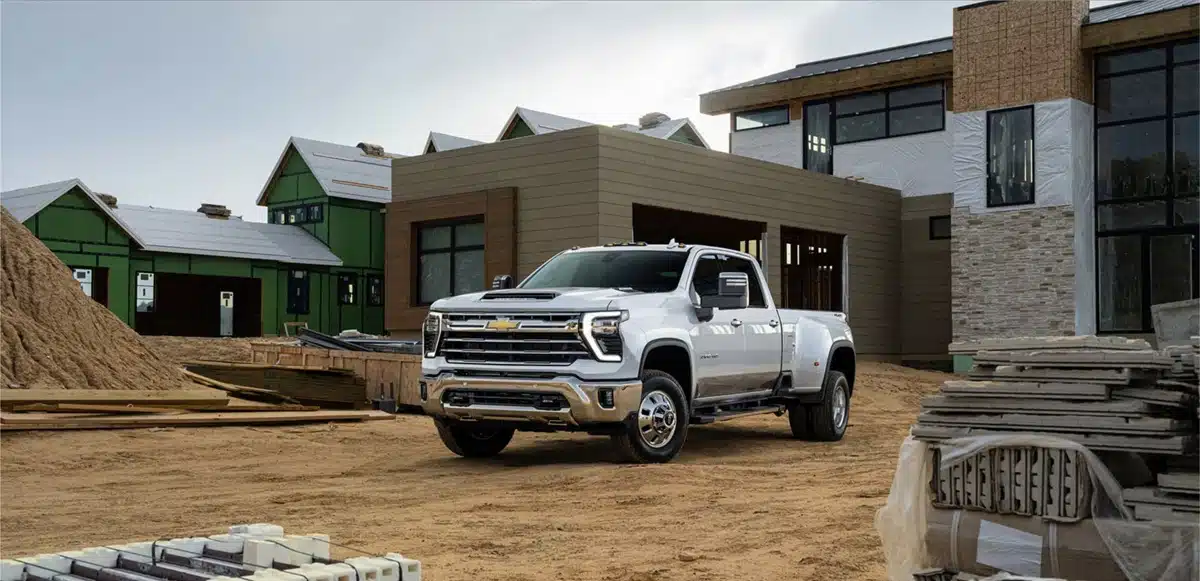
2026 2500 3500 Towing Chart
🚛 Quick-Compare: Max Towing Snapshot (2026)
Important: Max ratings are configuration-dependent (cab, bed, axle ratio, drivetrain, wheel/tire, trim, options, hitch type).
| 2026 Heavy-Duty Truck | Max Conventional Towing (bumper/receiver) | Max Gooseneck / 5th-Wheel Towing |
|---|---|---|
| Silverado 2500 HD | 20,000 lb | 22,050 lb |
| Silverado 3500 HD | 20,000 lb | 36,000 lb (gooseneck) / 35,500 lb (5th-wheel) |
| Ram 2500 | 20,000 lb | (varies; see chart section below) |
| Ram 3500 | 34,490 lb (conventional max shown) | 36,610 lb (5th-wheel max shown) |
| Ford Super Duty F-250 | 22,000 lb | (varies by selector chart) |
| Ford Super Duty F-350 (DRW) | 28,000 lb | Up to 40,000 lb (5th/gooseneck selector chart) |
🔥 The One Link You Should Trust for GM Numbers (OEM)
If you only click one OEM GM document for 2026 towing math, make it this:
Chevrolet 2026 Trailering Guide (OEM PDF):
(That’s the document Chevrolet uses to publish the Silverado HD conventional + gooseneck/5th-wheel trailer weight rating tables, plus definitions and trailering tech.)
✅ The Complete 2026 2500/3500 Towing Chart (Deep Detail)
Below, you’ll get:
- Exact max conventional and max gooseneck/5th-wheel ceilings.
- What actually limits you in the real world (payload, pin weight, hitch weight, tire ratings, axle ratings).
- How to match a trailer to a truck configuration without guessing.
If you want more towing walkthroughs and truck-by-truck breakdowns, browse TruckReportGeeks.com.
1) The 5 Numbers That Decide Your Real Towing Limit
Most people shop towing capacity like it’s one number.
It isn’t.
Your real limit is whichever of these gets hit first:
🧱 (A) GVWR (Gross Vehicle Weight Rating)
The max your truck itself can weigh: truck + fuel + passengers + cargo + hitch + tongue/pin weight.
🔗 (B) GCWR (Gross Combined Weight Rating)
The max of truck + trailer together.
🧰 (C) Payload
How much weight you can add to the truck before you hit GVWR.
Payload is what gets destroyed by big fifth wheels.
🧲 (D) Rear GAWR + Tire Ratings
Your rear axle and tires must be able to carry the pin weight plus everything else in/on the truck.
🧱 (E) Hitch Type Limits (receiver vs gooseneck vs 5th)
Conventional towing uses tongue weight (usually 10–15%).
5th-wheel/gooseneck uses pin weight (often 15–25%).
Chevrolet explicitly publishes this guidance (10% conventional; 15% gooseneck/5th-wheel when towing max trailer weight).
Translation: A “22,000 lb fifth-wheel rating” does not mean you can hook up a 22,000 lb fifth wheel if your payload can’t handle the pin weight.
2) 2026 Silverado 2500 HD Towing Chart (Max Conventional + 5th/Gooseneck)
✅ Silverado 2500 HD: Absolute Max Ratings (2026)
From Chevrolet’s published Silverado HD tables:
- Max conventional towing: 20,000 lb
- Max gooseneck/5th-wheel towing: 22,050 lb
A commonly-cited “max conventional” chart for Silverado 2500 HD also shows 20,000 lb under the Duramax + Max Trailering configuration .
🧠 What configurations usually produce the top 2500 numbers?
When manufacturers publish max ratings, it’s typically tied to:
- Diesel powertrain option that supports higher GCWR.
- Correct axle ratio for towing.
- Proper hitch equipment and cooling.
- The exact cab/bed combination that best balances curb weight vs rating tables.
Chevrolet’s Silverado HD tables show how the same engine can produce different max ratings depending on model/cab/bed and whether you’re towing conventional vs gooseneck/5th-wheel .
⚠️ The 2500HD reality check: payload is the limiter
A fifth-wheel at 22,050 lb can easily carry 3,300–5,500 lb of pin weight depending on how it’s loaded (15–25% range).
That pin weight counts as payload.
If you want a simple rule:
- Gooseneck/5th-wheel trailer weight × 0.20 = “planning pin weight.”
Then add:
- hitch hardware weight (often 150–300+ lb),
- passengers,
- bed cargo,
- toolboxes,
- auxiliary tanks.
If your payload can’t absorb that, you are done—regardless of the “max tow rating.”
For more towing math and real-world payload breakdowns, visit TruckReportGeeks.com.
3) 2026 Silverado 3500 HD Towing Chart (This Is the Big-League Jump)
This is where the real separation begins.
Chevrolet’s 2026 guide lists Silverado 3500 HD max trailer figures up to 36,000 lb .
✅ Silverado 3500 HD: Absolute Max Ratings (2026)
From Chevrolet’s Silverado HD tables:
- Max conventional towing (bumper/receiver): 20,000 lb (appears across multiple Duramax configurations)
- Max gooseneck towing: 36,000 lb (requires specific configuration)
- Max 5th-wheel towing: 35,500 lb (with configuration notes)
Chevrolet also notes the 36,000 lb figure in the “maximum trailer weight ratings by model” overview section .
📌 The fine print that matters (don’t skip)
Chevrolet’s 3500 HD table includes configuration callouts, including a note indicating the 36,000 lb gooseneck rating requires a specific trim/package combination, and that without the available Max Trailering Package the rating is reduced (as shown in the table notes) .
Bottom line: To legitimately hit 36,000 lb, you’re shopping for a very specific build, not a random 3500 badge.
🧱 Why 3500 beats 2500 in the real world (even when tow ratings look “close”)
Yes, tow ratings rise.
But the bigger advantage is usually:
- higher rear axle ratings,
- higher tire capacity (especially DRW),
- more stable platform under heavy pin weight.
That’s why large fifth wheels and equipment trailers often “feel safer” behind a properly-configured 3500, even if the paper tow rating isn’t the first number you hit.
4) 2026 Ram 2500 / 3500 Towing Chart (SAE J2807, Table-Based)
Ram publishes a Tow/Pay chart that includes maximum trailer weight capacities and important limits (including conventional tongue weight guidance and when a 5th-wheel/gooseneck hitch is required) .
✅ Ram 2500: Max Towing (2026 chart ceiling)
Ram’s official model page for the 2026 Ram 2500 lists Max Towing: 20,000 lb (when properly equipped) .
✅ Ram 3500: Key max figures shown in the Tow/Pay chart
From Ram’s Tow/Pay chart:
- A maximum conventional figure shown is 34,490 lb (listed as “34,490/NA” on a DRW line)
- A maximum 5th-wheel figure shown is 36,610 lb (listed as “NA/36,610”)
Ram also states:
- conventional hitch tongue weight guidance (10% of gross trailer weight),
- receiver tongue weight caps (2,000 lb for Ram 2500; 2,300 lb for Ram 3500),
- and when a gooseneck/5th-wheel hitch is required for higher trailer weights .
⚠️ Why the receiver tongue weight cap matters
Even if a truck can “pull” a heavy trailer, your receiver and tongue weight can cap you first.
Example math:
- If your receiver tongue weight cap is 2,000 lb, then a conventional trailer at 12% tongue weight would top out around:
2,000 / 0.12 = 16,666 lb.
That’s why gooseneck/5th-wheel becomes mandatory for heavy loads: it moves load into the bed/axle structure and uses different hardware limits.
5) 2026 Ford F-250 / F-350 Towing Chart (Conventional + 5th/Gooseneck)
Even though Ford doesn’t use “2500/3500” badges, the cross-shop is real: F-250 ≈ 2500 class; F-350 ≈ 3500 class.
✅ Ford 2026 conventional capacity ceilings (quick reference)
Ford’s 2026 guide lists conventional “trailer capacity” figures including:
- F-250: 22,000 lb
- F-350 SRW: 25,000 lb
- F-350 DRW: 28,000 lb
✅ Ford 2026 max 5th/gooseneck ceiling shown in selector charts
In Ford’s selector tables, maximum 5th/gooseneck values can reach 40,000 lb under certain engine/axle/GCWR conditions .
⚠️ Ford also publishes frontal area limits
Ford notes a frontal area limitation (example: 75 sq ft for 5th-wheel/gooseneck applications for certain Super Duty/trailer combinations) .
That matters for tall enclosed trailers, large RV front caps, and anything with high aerodynamic drag.
🧮 The “Stop Guessing” Towing Math (Payload + Pin Weight)
If you want to stay legal and stable, you do not start with “max tow rating.”
You start with payload math.
Step 1: Estimate tongue/pin weight correctly
- Conventional tongue weight planning range: 10–15%.
- Gooseneck/5th-wheel planning range: 15–25%.
Chevrolet’s trailering materials present a “10% conventional / 15% gooseneck/5th-wheel when towing max” guideline .
Practical planning rule:
- Conventional: trailer × 0.13 (middle-of-road).
- Fifth/gooseneck: trailer × 0.20 (safer planning midpoint).
Step 2: Subtract the “invisible payload thieves”
Payload gets eaten by:
- People.
- Bed cargo.
- Hitch hardware.
- Toolboxes.
- Aftermarket bumpers/winches.
- Auxiliary fuel tanks.
- Anything in the cab.
Step 3: Confirm door sticker + axle ratings
Your final authority is the truck’s:
- Tire and Loading label (payload),
- certification label (GVWR/GAWR),
- and the OEM towing guide tables for your exact configuration.
This is also why the most useful towing content is configuration-based—not just “one number.”
🧰 Hitch Types Explained (And When Each Makes Sense)
Conventional (bumper-pull / receiver)
Best for:
- utility trailers,
- boats,
- smaller equipment,
- travel trailers (with proper WDH and brakes).
Watch-outs:
- tongue weight caps,
- receiver class limits,
- sway control needs,
- stability sensitivity to wheelbase.
Gooseneck
Best for:
- heavy equipment trailers,
- flatbeds,
- livestock,
- big loads that need stability.
Advantages:
- typically higher weight ceiling,
- stable load placement,
- strong bed-mounted structure.
5th-wheel
Best for:
- large RVs,
- enclosed car haulers,
- high pin-weight loads needing control.
Advantages:
- excellent stability,
- predictable tracking,
- strong load transfer.
🧾 “Max Tow” Shopping Checklist for 2026 2500/3500 Buyers
Use this checklist before you commit to a truck:
- What trailer type is it (conventional vs gooseneck vs 5th-wheel)?
- What’s the trailer’s GVWR and realistic loaded weight? (don’t use “dry weight.”)
- Estimate tongue/pin weight (0.13 conventional, 0.20 5th/gooseneck planning).
- Confirm your truck’s payload on the door label.
- Confirm rear axle + tire ratings support your pin weight.
- Confirm GCWR and the OEM tow table for your exact build (cab/bed/engine/drivetrain/axle).
- Brake controller + trailer brakes: verify compatibility and setup.
- Cooling + tow mode + exhaust brake behavior: especially on long grades.
Chevrolet’s guide details trailering tech and rating tables and is the best OEM place to cross-check Silverado HD configurations .
❓ FAQs (2026 2500/3500 Towing)
What is the max towing for a 2026 Silverado 2500 HD?
Chevrolet’s published tables show up to 20,000 lb conventional and up to 22,050 lb gooseneck/5th-wheel depending on configuration
What is the max towing for a 2026 Silverado 3500 HD?
Chevrolet shows up to 36,000 lb gooseneck and up to 35,500 lb 5th-wheel, with configuration requirements
Why is conventional towing often capped around 20,000 lb on some HD trucks?
Receiver limits, tongue weight limits, and stability constraints often cap conventional towing before the powertrain does.
What matters more: tow rating or payload?
For fifth-wheel and gooseneck, payload is usually the first limiter because pin weight is heavy and counts against GVWR.
Can a 2500 tow a big fifth wheel safely?
Some can, on paper, but the real gate is payload + rear axle/tire capacity.
If pin weight plus passengers and gear exceed payload or rear GAWR, you need a different configuration (or a 3500, often DRW).
What’s the biggest mistake people make when comparing 2500 vs 3500?
They shop by “max tow rating” and ignore payload and rear axle/tire capacity, which is where 3500 models usually win in real towing.
Do trim levels change towing?
They can. Heavier trims reduce available payload and can alter ratings in OEM tables.
Always verify the exact configuration in the OEM charts for your truck.
Sources
Chevrolet 2026 Trailering Guide (PDF)
Ford 2026 Super Duty Pickup Towing Guide (PDF)
Ram 2026 Heavy Duty Customer Tow/Pay Chart (PDF)
✅ Conclusion
If you want the cleanest way to shop 2026 2500/3500 towing, do it in this order:
- Trailer type and realistic loaded weight.
- Pin/tongue weight estimate.
- Payload and rear axle/tire capacity.
- OEM tow tables for your exact configuration.
- Then—and only then—compare “max tow” numbers.
If you want, I can generate a second, even more aggressive “rank-to-win” version of this post that expands into:
- dedicated sub-charts for each cab/bed,
- a full payload-to-pin-weight calculator section,
- and scenario-based recommendations (RV vs equipment vs car hauler).
Before you go: Like and comment with your exact trailer type and estimated loaded weight, and I’ll tell you which 2026 2500/3500 configuration is the safest match, and visit us again Truck Report Geeks.